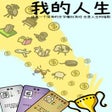
My Life: card-based roguelike life simulator for Mac players
Wǒ de Rén Shēng, developed by ZZ Games, is a life simulation that tasks players with steering a character through education, career, and relationships. The game uses a deck-building roguelike framework to resolve decisions, drawing from more than 380 cards and over 400 random events that shape outcomes. It balances attribute management, career choices, and a satirical, banter-filled narrative. Fans of single-player strategy and life sims seeking high replay value will find its design rewarding, with episodic runs and multiple endings to explore.
What kind of experience does the hybrid life sim offer?
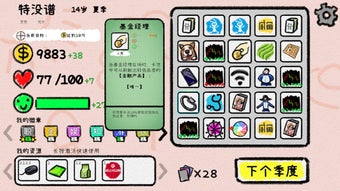
In this game, the core loop merges card management with long-term character planning. Players assemble and play from a deck to affect education, career moves, and relationships. The mechanic set centers on resource choices resolved through card draws, with more than 380 cards and over 400 randomized events shaping outcomes. Progress depends on balancing attributes such as intelligence and charm to reach different life milestones across episodic runs.
Does it support cooperative or multiplayer play?
In this game, the design targets single-player sessions rather than shared matches. Decisions act as individual resource puzzles where attributes and card choices drive career and family outcomes. The experience centers on solo runs rather than synchronous interaction.
- Deck-building and card play
- Attribute management and milestones
- Branching career and family choices
How does the game present story and tone?
Here the narrative tone provides much of the game's personality. The writing is satirical and described as "banter-filled," so events often carry humor alongside consequences. The interface centers on card play and event text, keeping interaction focused on choices rather than spectacle. Sound and graphical detail are not highlighted in the notes, so the experience relies on writing and card mechanics to deliver an unpredictable, often humorous depiction of modern life.
Is it hard to get started and how does progression feel?
Early sessions demand deliberate deck construction and attribute trade-offs, which rewards planning but can feel opaque at first. The game offers multiple endings and milestones tied to stat thresholds, creating long-term goals that encourage repeated plays. Random events change each run, producing high replayability. Players who prefer predictable progression may find the randomized outcomes challenging, while those who enjoy adaptive strategy benefit from varied runs.
Who should pick this title, and what to watch for
The game received a Mixed reception on Steam, roughly 64% positive, reflecting player concerns about late-game balance and the steep difficulty of some random events. Given that, this title suits players who enjoy strategic, planning-heavy single-player experiences and darkly humorous writing. Its experimental blend rewards players willing to accept variance between runs and uneven challenge across longer campaigns.








.png)